
“How much does a new industrial steam boiler cost?”
In real projects, the answer is always a price range, not a fixed number.
Based on market data, manufacturer quotations, and engineering practice, a new industrial steam boiler typically costs between USD 25,000 – 1,800,000.
The final price depends on boiler type, fuel, steam parameters, certification level, and system configuration.
This article breaks down exact price ranges and percentage differences behind each factor.
All figures below refer to new boilers, ex-works price unless otherwise stated.
Typical Price Range of a New Industrial Steam Boiler
Before analysing individual factors, it is necessary to understand the overall market range.
| Boiler Capacity | Typical Application | Price Range (USD) |
|---|---|---|
| 0.5–1 TPH | Laundry, lab, food prep | 25,000 – 60,000 |
| 2–4 TPH | Food, textile, hospital | 60,000 – 180,000 |
| 6–10 TPH | Manufacturing, packaging | 180,000 – 420,000 |
| 15–25 TPH | Chemical, paper, refinery | 420,000 – 900,000 |
| >30 TPH | Power, heavy industry | 900,000 – 1,800,000+ |
These prices do not yet include fuel-specific differences or certification premiums.
Those factors are explained below.
1. Fire Tube vs Water Tube Steam Boiler: Exact Price Differences

Fire Tube vs Water Tube Steam Boiler
Base Price Comparison at the Same Steam Capacity
At the same steam output and pressure, water tube boilers are consistently more expensive than fire tube boilers.
| Boiler Type | 6 TPH, 10 bar | 10 TPH, 16 bar |
|---|---|---|
| Fire tube | USD 150,000–190,000 | USD 240,000–300,000 |
| Water tube | USD 210,000–260,000 | USD 340,000–420,000 |
Price difference:
Water tube boilers are typically 30%–45% more expensive than fire tube boilers under comparable conditions.
Why Fire Tube Boilers Cost Less
Fire tube boilers use simpler pressure vessels and fewer circulation components.
Manufacturing time is shorter, and inspection requirements are lighter.
| Cost Item | Fire Tube | Difference |
|---|---|---|
| Steel consumption | Lower | −10% to −15% |
| Welding workload | Lower | −20% |
| Fabrication time | Shorter | −25% |
This makes fire tube boilers more economical for capacities below 20 TPH.
Why Water Tube Boilers Cost More
Water tube boilers require thicker headers, more tubing, and stricter quality control.
They are designed for higher pressure and rapid load variation.
| Cost Driver | Added Cost Impact |
|---|---|
| Material upgrade | +8%–12% |
| Engineering hours | +10%–15% |
| Inspection & testing | +5%–8% |
Total price increase typically reaches +30% to +45%.
2. Fuel Type Impact on Industrial Steam Boiler Price
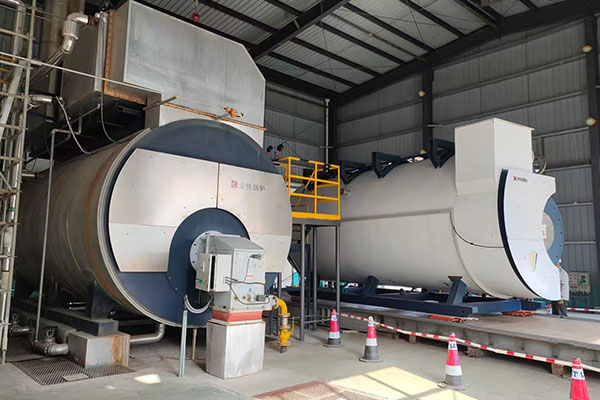
Fuel type is one of the most visible factors affecting the price of a new industrial steam boiler.
Even at the same steam capacity, different fuels require different combustion systems, furnaces, and auxiliary equipment.
The table below shows typical ex-works price ranges (USD) for industrial steam boilers using different fuels.
All prices are based on standard pressure (10–16 bar) and non-condensing configurations.
Industrial Steam Boiler Price by Fuel Type and Capacity (USD)
| Fuel Type \ Capacity | 1 TPH | 2 TPH | 4 TPH | 6 TPH | 10 TPH |
|---|---|---|---|---|---|
| Natural gas / LPG | 30,000–45,000 | 60,000–90,000 | 95,000–140,000 | 150,000–200,000 | 240,000–320,000 |
| Biogas | 38,000–58,000 | 75,000–115,000 | 120,000–175,000 | 190,000–260,000 | 300,000–410,000 |
| Light oil (diesel) | 33,000–50,000 | 68,000–100,000 | 105,000–155,000 | 165,000–225,000 | 270,000–360,000 |
| Heavy oil (HFO) | 36,000–55,000 | 72,000–110,000 | 115,000–170,000 | 185,000–255,000 | 310,000–420,000 |
| Coal-fired | 45,000–70,000 | 90,000–140,000 | 160,000–240,000 | 260,000–360,000 | 420,000–580,000 |
| Biomass-fired | 42,000–65,000 | 85,000–130,000 | 150,000–220,000 | 240,000–340,000 | 360,000–500,000 |
Note: Prices may vary by region, emission standards, and system scope.
How to Read the Price Differences in the Table
Natural gas and LPG boilers represent the baseline cost in most markets.
They require the simplest burner systems and the least auxiliary equipment.
Compared with gas-fired boilers, light oil systems are typically 10%–15% more expensive.
This increase comes from fuel storage tanks, pumps, and oil atomisation equipment.
Heavy oil boilers show a 15%–30% price increase over gas systems.
The premium is driven by fuel heating systems, reinforced burners, and higher maintenance design margins.
Biogas boilers cost 20%–30% more than natural gas boilers at the same capacity.
This is mainly due to gas quality fluctuation control, additional sensors, and safety interlocks.
Coal-fired boilers are usually 40%–60% more expensive than gas-fired boilers.
Fuel conveying, ash removal, dust collection, and emission control systems account for most of the added cost.
Biomass-fired boilers show a 35%–60% price increase, depending on fuel type and moisture content.
They require customised feeding systems and larger furnace volumes.
Why the Price Gap Widens at Higher Capacities
As boiler capacity increases, fuel-related cost differences become more obvious.
This is because auxiliary systems scale faster than the boiler pressure vessel itself.
For example, at 1–2 TPH, the price gap between gas and biomass boilers may be USD 15,000–30,000.
At 8–10 TPH, the gap often exceeds USD 120,000–180,000.
Higher-capacity boilers also face stricter emission requirements.
Solid fuel systems are affected the most by these regulations.
Practical Cost Insight for Buyers
If fuel availability is stable and emissions regulations are strict, gas-fired boilers offer the lowest capital cost.
Oil-fired boilers are usually chosen only where gas is unavailable.
Coal and biomass boilers require higher upfront investment, even though fuel costs may be lower.
Buyers should evaluate total lifecycle cost rather than boiler price alone.
3. Boiler Parameters and Price Relationship
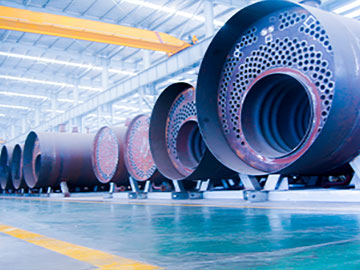
Steam Capacity (TPH) Price Scaling
Boiler price does not increase linearly with capacity.
| Capacity Increase | Typical Price Increase |
|---|---|
| 2 → 4 TPH | +50%–60% |
| 4 → 6 TPH | +35%–45% |
| 6 → 10 TPH | +50%–65% |
| 10 → 20 TPH | +70%–90% |
Larger boilers require disproportionately more steel and testing.
Steam Pressure Impact on Price
Higher pressure directly increases shell thickness and inspection cost.
| Pressure Level | Price Increase |
|---|---|
| 10 → 16 bar | +8%–12% |
| 16 → 25 bar | +15%–20% |
| 25 → 40 bar | +25%–35% |
Pressure is one of the fastest ways to increase boiler cost.
Efficiency Level and Cost
Higher efficiency requires heat recovery equipment.
| Efficiency Level | Price Increase |
|---|---|
| Standard (85%–88%) | Baseline |
| High (90%–92%) | +6%–10% |
| Condensing (>95%) | +12%–18% |
4. Is Paying More for Boiler Certification Necessary?
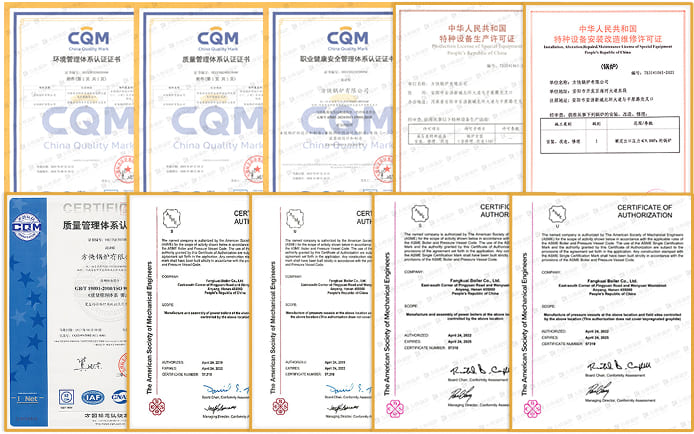
Boiler certification is one of the most misunderstood cost items in industrial steam boiler pricing.
Many buyers see certifications as “extra paperwork”, while others treat them as mandatory for every project.
In reality, certification affects price, market access, and legal compliance, but it does not automatically define boiler quality.
Whether certification is necessary depends on local regulations, project scale, and customer requirements.
Common Boiler Certifications: Cost, Purpose, and Necessity
The table below summarises the most common industrial boiler certifications, their typical price impact, and when they are required.
| Certification Type | Price Impact | Main Purpose | Is It Always Necessary? |
|---|---|---|---|
| ASME | +10%–15% | Legal use in US / Canada, third-party inspection | Required only for regulated markets |
| CE (PED) | +5%–8% | Compliance with EU Pressure Equipment Directive | Required for EU projects |
| ISO | +1%–3% | Quality management system certification | Not mandatory for equipment use |
| ATEX | +12%–18% | Explosion protection in hazardous areas | Required only in ATEX zones |
| No certification | 0% | Internal or local compliance | Acceptable in some regions |
Price impact is calculated against a non-certified base boiler of the same specification.
What You Are Really Paying for When You Buy Certification
Certification does not change the basic working principle of a boiler.
What it adds is formal compliance and third-party verification.
For example, ASME certification requires material traceability, qualified welding procedures, and inspector supervision.
These steps increase cost, time, and documentation workload.
| Cost Component | Certification Impact |
|---|---|
| Third-party inspection | Mandatory |
| Documentation & testing | Increased |
| Manufacturing control | Stricter |
| Lead time | Longer |
This is why certified boilers are more expensive, even when performance is similar.
Does “No Certification” Mean No Quality Assurance?
No. Certification and quality are not the same thing.
This is a critical point that many buyers misunderstand.
A boiler can be manufactured using the same materials, welding standards, and production processes with or without certification.
The difference is whether the manufacturer applies for and pays the certification process.
In real projects, some customers choose not to include certain certifications purely to reduce cost, especially when local regulations do not require them.
In such cases, the boiler itself can still meet the same internal quality standards.
Why Some Certified Manufacturers Still Sell Non-Certified Boilers
Many experienced manufacturers operate standardised production systems that already meet ASME, CE, or ISO requirements internally.
Removing certification does not mean lowering manufacturing quality.
In fact, deliberately reducing material quality or workmanship would disrupt standardised production workflows.
This often increases internal cost and risk rather than reducing it.
From a manufacturing perspective, consistent standards are more efficient than mixed-quality production.
FangKuai Boiler’s Certification Approach (Industry Practice Example)
FangKuai Boiler holds ASME, CE, ISO, and ATEX certifications.
Certification is provided strictly based on customer project requirements.
If a project does not require certain certifications, FangKuai can supply the boiler without certification-related costs.
However, the manufacturing standards, materials, and processes remain unchanged.
This approach avoids unnecessary certification expenses while maintaining stable production quality.
It also protects both the customer and the factory from long-term risk.
So, Is Paying More for Certification Necessary?
The answer is not always.
Certification is necessary when:
-
Local laws or authorities require it
-
The project involves export to regulated markets
-
Insurance or third-party approval depends on it
-
The project scale or risk level is high
Certification may be optional when:
-
The boiler is used domestically
-
Local regulations do not mandate it
-
The customer prioritises cost control
-
The application is low to medium risk
Ultimately, certification is a policy and project decision, not a pure quality decision.
Understanding this distinction helps buyers avoid overpaying—or under-complying.
5. Why Do Different Manufacturers Quote Different Prices?
It is common for buyers to receive very different quotations for what appears to be the same industrial steam boiler.
In many cases, the price gap is not caused by profit margin alone, but by scope definition and manufacturing standards.
Before comparing prices, it is essential to understand what is actually included in each quotation.
The table below summarises the main factors that create price differences between manufacturers.
Key Reasons for Price Differences Between Boiler Manufacturers
| Factor | Price Difference Range | What Actually Changes |
|---|---|---|
| Quotation scope | +15%–45% | Boiler only vs complete system |
| Feedwater system | +5%–12% | Water treatment level and protection |
| Control system | +5%–15% | Relay vs PLC vs remote monitoring |
| Material selection | +6%–15% | Steel grade, tube material |
| Manufacturing standard | +8%–18% | Welding, testing, QA process |
| Engineering & R&D | +5%–10% | Customisation, load matching |
| After-sales capability | +5%–12% | Commissioning, spare parts, service |
All percentages are calculated against a basic boiler-only quotation.
1. Quotation Scope: Boiler Only vs Boiler System
The most common reason for price difference is quotation scope.
Some manufacturers quote only the boiler pressure vessel, while others include burners, pumps, and auxiliaries.
A “low-price” quote may exclude key components that are later added as extras.
This can increase the final project cost by 30% or more.
From a buyer’s perspective, scope clarity matters more than unit price.
2. Feedwater System Configuration
Feedwater quality directly affects boiler lifespan and safety.
However, not all quotations include the same level of water treatment.
Basic systems may only include a feed pump.
More complete systems add softeners, deaerators, and chemical dosing.
The price difference between basic and complete feedwater systems is usually 5%–12%, but the impact on long-term operation is much larger.
3. Control System Level
Control systems vary significantly between manufacturers.
Some use simple relay logic, while others adopt full PLC-based automation.
PLC systems allow better load control, alarms, and fault diagnostics.
They typically add 5%–15% to the boiler price.
A lower control cost today may mean higher downtime risk tomorrow.
4. Material Selection and Component Quality
Material quality is not always visible in quotations.
Differences in steel grade, tube thickness, and valve brands affect cost.
Higher-grade materials usually add 6%–15% to the base price.
They also extend service life and reduce maintenance frequency.
This is one area where “cheap” is often expensive in the long run.
5. Manufacturing Standards and Quality Control
Manufacturers differ in welding procedures, inspection depth, and testing standards.
Some follow international codes internally even when certification is not required.
Higher manufacturing standards increase production cost by 8%–18%.
They also reduce failure risk and improve consistency.
From a factory perspective, stable standards are more efficient than mixed-quality production.
6. Engineering and R&D Capability
Manufacturers with engineering teams can optimise boiler selection and configuration.
They match steam load, pressure fluctuation, and fuel characteristics more accurately.
This engineering input typically adds 5%–10% to the price.
However, it often reduces operating cost and oversizing risk.
Not all boilers are “plug-and-play” products.
7. After-Sales Service and Long-Term Support
After-sales capability is often underestimated during price comparison.
Commissioning support, spare parts availability, and response time all cost money.
Manufacturers that invest in service infrastructure usually price 5%–12% higher.
This premium reduces downtime risk over the boiler’s operating life.
For continuous-process industries, this difference is critical.
How Buyers Should Compare Quotes Correctly
Price differences between manufacturers are rarely accidental.
They reflect what is included, how it is built, and how it will be supported.
Before choosing the lowest quote, buyers should confirm:
-
Are all system components included?
-
Are materials and standards clearly specified?
-
Is engineering support available?
-
What happens after installation?
A meaningful comparison starts with aligned technical scope, not the bottom-line number.
FAQ – Industrial Steam Boiler Pricing & Selection
1. What is the most realistic budget for a new industrial steam boiler?
For most industrial users, a realistic budget is USD 80,000–350,000.
This typically covers 2–10 TPH gas-fired boilers with standard certifications.
Higher capacities, solid fuel, or full turnkey systems will increase cost accordingly.
2. Which factor increases boiler price the fastest?
Steam pressure and fuel type are the main drivers.
High-pressure boilers or coal/biomass-fired boilers can increase price by 20%–50% independently.
Capacity also scales cost, but not as dramatically as pressure or fuel type.
3. Is a higher-priced boiler always better?
Not necessarily.
The important question is whether the price increase matches operational needs.
For low-duty or intermittent use, a simpler, lower-cost boiler may be more economical over its lifetime.
4. How much does certification affect price?
Certifications such as ASME, CE, ISO, or ATEX can add 5%–18% to the base boiler cost.
They are necessary for regulatory compliance, export, or high-risk projects.
However, the boiler itself can meet the same internal quality standards even without some certifications.
5. Can I buy a non-certified boiler safely?
Yes, if local regulations do not mandate certification.
Many manufacturers maintain standardised quality processes internally.
Non-certified boilers can still be reliable, as long as materials, welding, and inspection standards are adhered to.
6. How does fuel type affect long-term cost?
Fuel type affects both capital and operating cost.
Gas-fired boilers have lower upfront cost but higher fuel price in some regions.
Solid fuel or biomass boilers require higher initial investment but may reduce fuel expenses.
Consider total lifecycle cost, not just purchase price.
Conclusion
A new industrial steam boiler typically costs USD 25,000 to over USD 1,800,000.
The final price is driven by boiler type, fuel, steam capacity, pressure, efficiency, certification, and system scope.
Fire tube boilers are usually 30%–45% cheaper than water tube boilers.
Coal and biomass systems cost 40%–60% more than gas-fired systems.
Certifications such as ASME and ATEX add 10%–18% to the base price.
Understanding these numbers allows buyers to budget accurately and avoid misleading quotations.
References
ASME Boiler and Pressure Vessel Code (BPVC)
European Pressure Equipment Directive (PED 2014/68/EU)
ATEX Equipment Directive (2014/34/EU)
International Energy Agency (IEA) – Industrial Heat and Boilers
Engineering Toolbox – Steam Boilers and Steam Systems
U.S. Energy Information Administration (EIA) – Industrial Energy Use
International Organization for Standardization (ISO)
Spirax Sarco – Steam Boiler Engineering and System Design
Get your best price
Quickly compare 3 FREE quotes
- Engineer quick quote
- The overall delivery speed is fast
- Financial choice
- Low installation costs and cost savings

25 years+ of boiler R&D
More than 20 innovative technologies