
The boiler circulation pump is the key component of a boiler system, driving the forced circulation of hot water or steam to ensure efficient heat transfer and reliable operation.
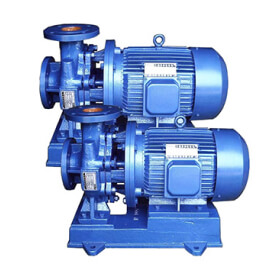
Applicable scenarios
- Power Plants: Circulates water to steam turbines and returns condensate to the boiler.
- Industrial Boilers: Provides consistent thermal energy for processes (e.g., chemical manufacturing).
- District Heating: Distributes hot water to buildings via radiators.
Structural Features
- Pump Casing & Impeller:
- Cast iron/stainless steel casing with hemispherical design to withstand high pressure/temperature (up to 300°C).
- Centrifugal/mixed-flow impellers optimized for low hydraulic resistance.
- Seals & Bearings:
- Mechanical seals (graphite/ceramic) or packed glands prevent leakage.
- Water-lubricated bearings with thrust bearings to handle axial loads.
- Insulation Barrier: Separates high-temperature fluid from the electric motor cooling system.
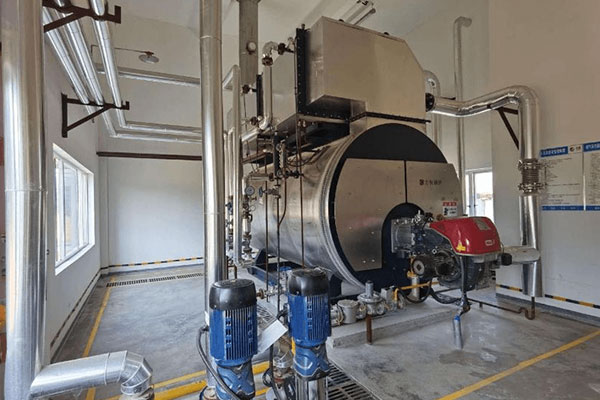
Working Principle
The motor drives the impeller → Creates centrifugal force → Draws in cooler return water → Accelerates fluid toward discharge → Heated in boiler → Hot water/steam flows to end-use points.
- Key Design: Sealed motor-pump shaft with separate cooling water circuit.
Types of Circulating Pumps
| Classification | Type | Characteristics |
|---|---|---|
| Orientation | Vertical | Space-saving; small boilers |
| Horizontal | High stability; large industrial systems | |
| Drive Source | Electric | Precise control; common in modern systems |
| Steam Turbine | Extreme environments; backup during outages | |
| Fluid Medium | Hot Water | Heating systems |
| Steam | High-temperature industrial applications |
Selection Criteria
- Flow & Head: Match boiler capacity (typically 120-150% of evaporation rate) + 30% head margin.
- Material: Stainless steel/Ni-alloy for >180°C; corrosion-resistant coatings for aggressive water.
- Efficiency: Variable frequency drives (VFDs) for load-based speed control.
Boiler Circulating Pump vs. Feedwater Pump: Key Differences
| Parameter | Circulating Pump | Feedwater Pump |
|---|---|---|
| Function | Recirculates existing water/steam within the boiler loop to maintain heat flow. | Supplies fresh water into the boiler to replace consumed steam/water. |
| System Role | Closed-loop circulation. | Open-loop replenishment. |
| Operating Pressure | Near boiler pressure (e.g., 150 bar). | Higher than boiler pressure (e.g., 180 bar) to inject water. |
| Temperature | Handles high-temperature fluid (200-300°C). | Typically handles preheated water (100-180°C). |
| Location | Between boiler drum and downcomers. | Between deaerator/condenser and boiler. |
| Criticality | Failure disrupts heat distribution. | Failure causes boiler low-level shutdown. |
| Efficiency Focus | Optimized for hydraulic efficiency in closed loops. | Designed for high head & cavitation resistance. |
Summary
Boiler circulating pumps enable efficient thermal transfer by recirculating hot water/steam within closed-loop systems. Key distinctions from feedwater pumps include their role in heat circulation versus water supply, operating conditions (pressure, temperature), and location in the system. Selection requires attention to flow-head requirements and material compatibility, while proactive maintenance prevents cavitation and wear-induced failures. VFD integration enhances energy efficiency in dynamic load scenarios.
Get your best price
Quickly compare 3 FREE quotes
- Engineer quick quote
- The overall delivery speed is fast
- Financial choice
- Low installation costs and cost savings

25 years+ of boiler R&D
More than 20 innovative technologies